A report that protects passersby, not the story
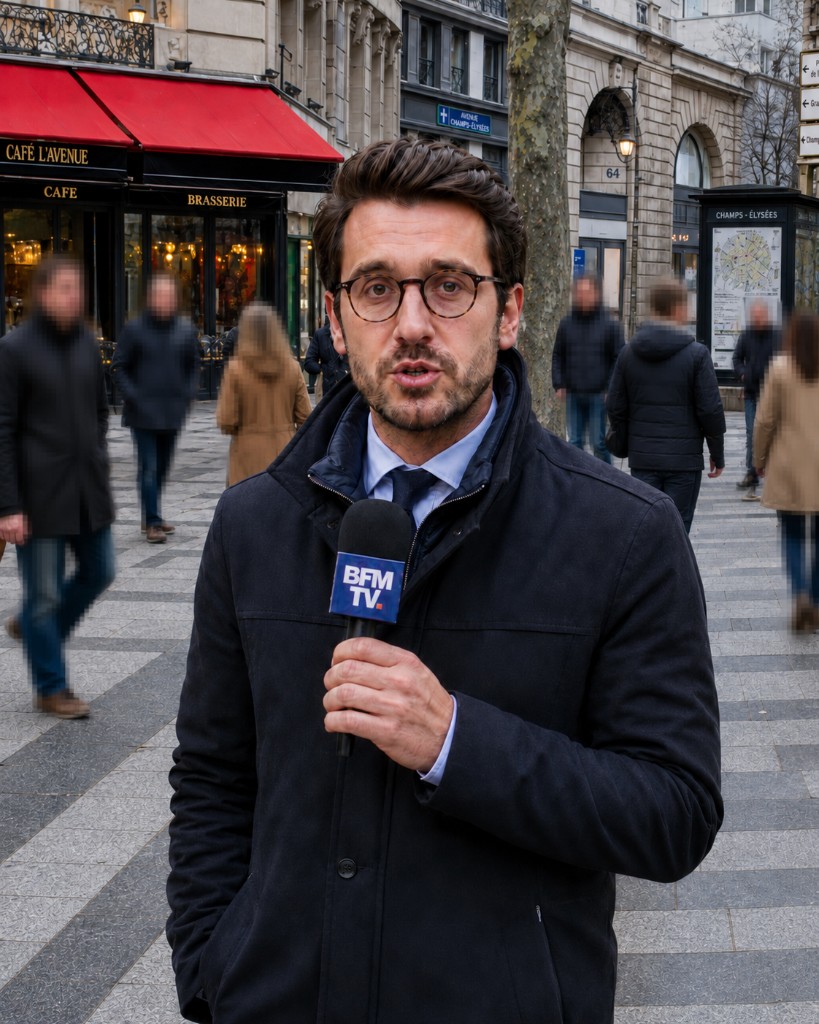
Flouter AI is an artificial intelligence model that automatically blurs passersby in video footage while keeping journalists and interview subjects visible. Built for media teams, it speeds up post-production while respecting image rights.
- Project
- Flouter AI · Codally internal R&D
- Sector
- Media · Journalism & video production
- Solution
- Selective AI blurring model
The challenge
During street interviews or outdoor reports, passersby naturally appear in frame. Manually blurring every face in post-production is slow, expensive and error-prone — with legal risk if an unblurred face is broadcast.
- Manual frame-by-frame editing, very time-consuming
- Risk of broadcasting an unblurred face (image rights)
- Hard to quickly distinguish passersby from people on mic
- Publication delays for editorial teams
Our approach
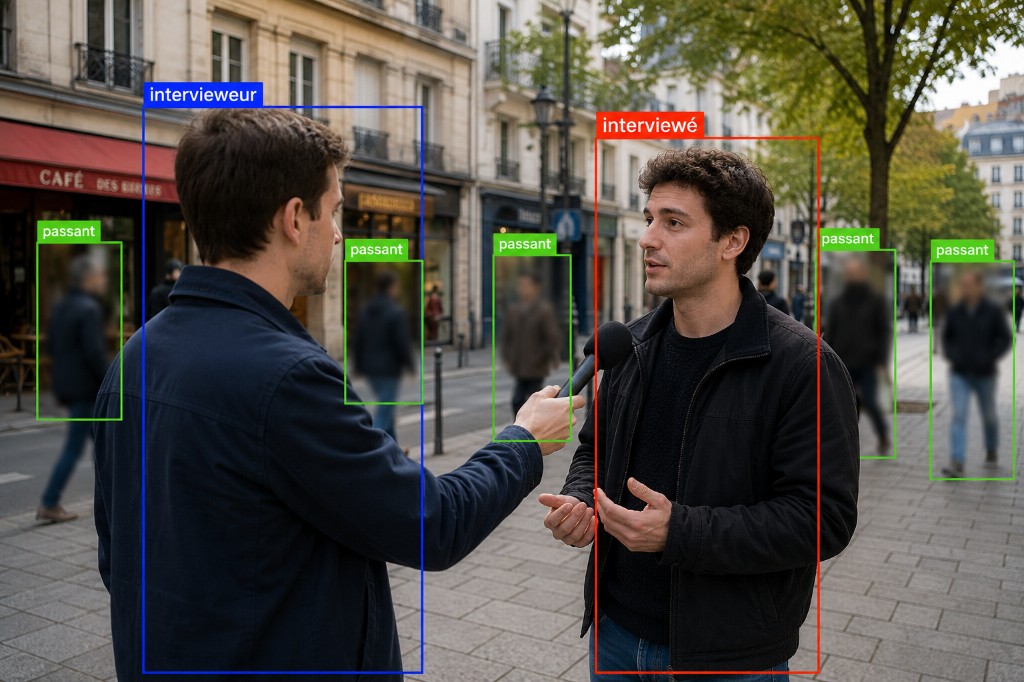
Flouter AI combines person detection, role classification and selective blurring. The model automatically identifies passersby to anonymize while preserving sharpness for journalists and interview subjects — on live feeds or in post-production.
- Person detection and tracking across the video sequence
- Classification: journalist, interviewee(s) vs passants
- Automatic blurring of passersby only (Gaussian or pixelation)
- Broadcast-ready export or integration into editing pipelines
How the tool works
From video import to compliant export, the pipeline automates anonymization without sacrificing editorial quality.
- 1Rush import
Load a file or connect to a live camera feed.
- 2Detection & roles
AI spots people and distinguishes journalist, interviewees and passersby.
- 3Selective blur
Only passersby are blurred automatically, frame by frame.
- 4Compliant export
Publish-ready video with traceability of anonymized zones.
Editorial side
Teams get an interface to preview blurring, adjust zones if needed and validate export before broadcast.
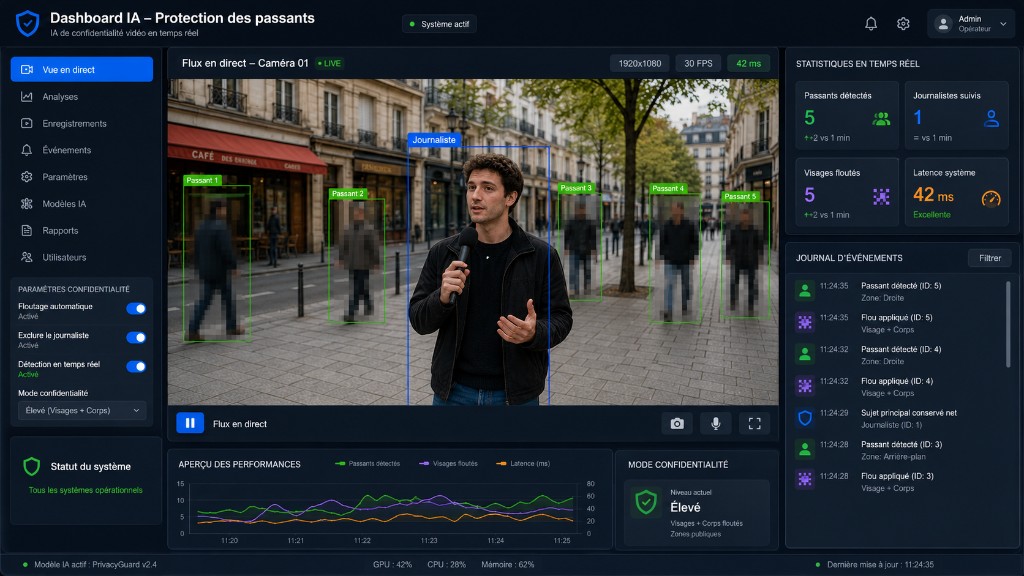
- Live preview
Instant preview of blurred output on the sequence.
- Protected subjects
Manual tagging of journalist and interviewees when needed.
- Blur intensity
Adjust pixelation or Gaussian blur level.
- History & audit
Log of blurred zones for editorial traceability.
Target outcomes
Early internal tests confirm the model's potential to drastically reduce manual editing while preserving main subjects.
Project in development — target indicators based on internal tests and feedback from consulted media teams.
Before / After Flouter AI (target)
| Metric | Before | After |
|---|---|---|
| Passerby blurring | Manual, frame by frame | Automatic |
| Post-production time | 3h 15 on average | 18 min |
| Omission risk | 1 face / 40 exports | 0 on 40 test exports |
| Interview subjects | Sometimes blurred by mistake | Always preserved |
Codally support
Flouter AI is being developed in close collaboration with media professionals to match real production and broadcast workflows.
- Media co-design
Workshops with journalists and editors to calibrate use cases.
- Real rush testing
Model validation on representative (anonymized) sequences.
- Pipeline integration
Connectors to existing editing and broadcast tools.
- Legal compliance
Image rights and Bill 25 alignment from day one.
Manually blurring every passerby on a street report means hours lost. A model that blurs automatically while keeping our subjects sharp would radically change our workflow.
Security & compliance
Processed rushes stay under editorial team control. The model is designed to minimize data retention and comply with image rights and Bill 25.
- Image rights
Systematic anonymization of non-consenting passersby.
- Local processing
Option to process video without cloud upload (depending on deployment).
- Minimization
No face retention beyond processing.
- Bill 25
Governance aligned with Quebec requirements.
Do you produce outdoor reports or street interviews?
Flouter AI is in development. Contact us to learn more or join pilot testing.